
PyroPhos™
Nano Phosphate Flame Retardant, a next-generation, halogen free Nano engineered phosphorus additive creating a molecular fire shield, delivering superior flame resistance, smoke suppression, durability at ultra low loadings.
PyroPhos , a Nano Phosphate Flame Retardant (NPFR), is a next-generation, Halogen free fire protection solution for high performance polymers. Using MORPHEON™ Nano Synthesis, it delivers functionalized phosphorus Nanoparticles that provide exceptional flame resistance, smoke suppression, char formation at reduced loadings. Unlike traditional systems, PyroPhos™ is a shearstable, Pre- dispersed concentrate that maintains mechanical properties and optical clarity.
When combined with our SynerLock FR™ synergist, It achieves unparalleled flame retardant efficiency and improved barrier properties for superior fire safety.
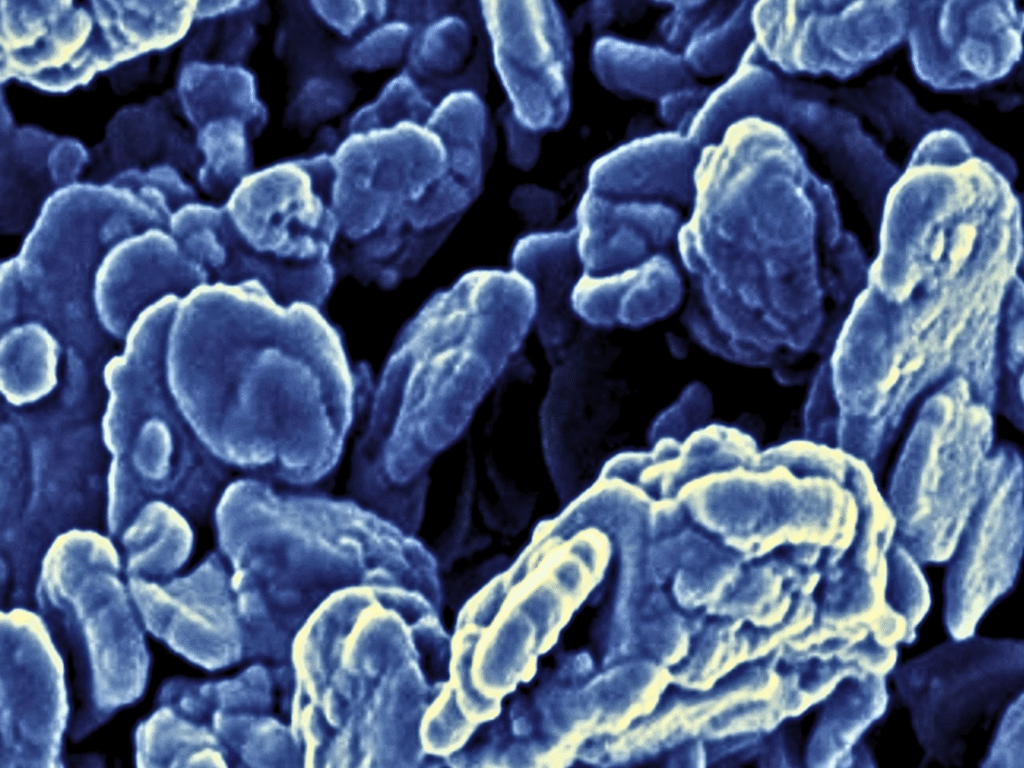
Conventional Challenges & Our Breakthrough
| Parameter | Conventional Phosphorus FRs | PyroPhos™ Nano Phosphate FR |
|---|---|---|
| Particle Size | Micro scale, Prone to clumping | Nano engineered, high surface area. |
| Dispersion | Challenging, Uneven performance | Uniformly dispersed with MORPHEON™ technology. |
| Loading | High (20–30%) for UL 94 V-0 | Lower (8–15%) for superior performance. |
| Char Quality | Inconsistent and brittle | Dense, cohesive intumescent char. |
| Mechanical Impact | Often reduces toughness | Maintains mechanical integrity. |
| Clarity | Can cause haze and discoloration | Maintains smooth finish and transparency. |
| Synergy | Limited potential | Works with SynerLock FR™ for enhanced performance. |
| Applications | Standard plastics | Advanced polymers, bioplastics, and electronics. |
Product Applications
| Industry / Segment | Suitable Polymers | Suitability | Notes |
|---|---|---|---|
| Automotive & Transportation | PA6, PBT, PP, PE, TPE | Excellent | Ideal for engineering plastics. Requires synergists for polyolefins |
| Electrical & Electronics (E&E) | PC, PC/ABS, PBT, Nylon, epoxy | Strong | Great for housings and connectors, use with phosphinates for thin parts |
| Packaging & Bioplastics | PLA, PET, Bio-PE, Bio-PP | Very Good | Excels in PLA films PET may need surface treatment for clarity |
| Construction & Infrastructure | PE, PP, EVA, PU | Good | Standard for panels and insulation, may need higher loadings without synergy |
| Coatings & Paints | Epoxy, polyester, PU | Excellent | Easy to disperse in thermosets for enhanced intumescent coatings |
| Textiles & Nonwovens | Polyester, Nylon, PP | Possible | Works for back-coatings, requires optimization for direct fiber spinning |
| Industrial Films & Sheets | PP, PE, PET | Moderate | Best for opaque or barrier films, may affect optical clarity |
| 3D Printing & Composites | PLA, ABS, PC blends, epoxy | Strong | Integrates well into filaments, resins, and composites |
Technical Specifications
| Property | Specifications |
|---|---|
| Active Ingredients | 98% Nano HFFR |
| Final Form | Pale white bulky coated powder |
| Typical Loading | 1– 7% LDR |
| Heat Release | Lower HRR and THR in cone calorimetry |
| Particle Size | > 120 nm |
| BET Specific Surface Area | 100~150 m²/gm |
Regulatory Compliances
- REACH and RoHS.